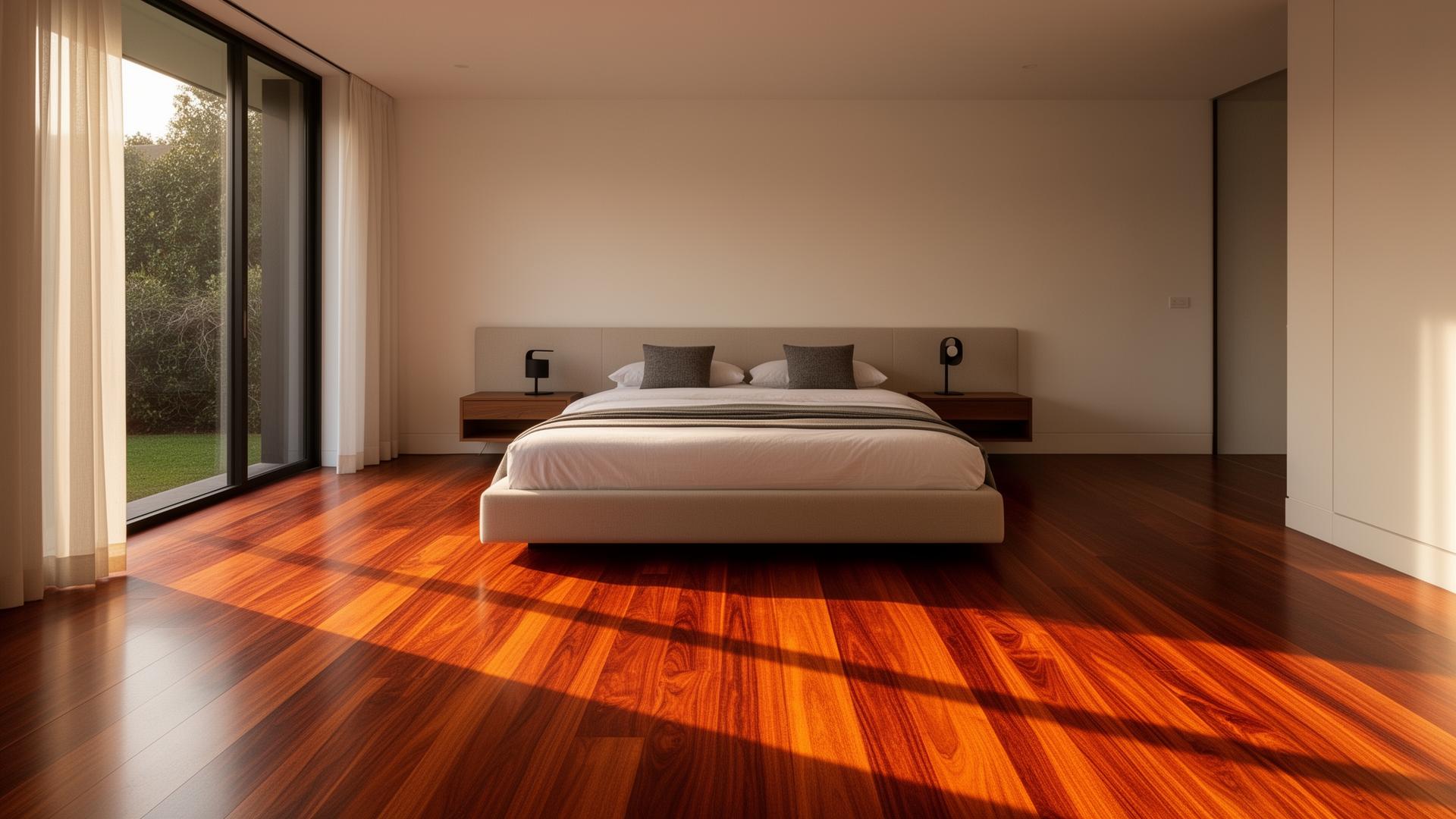
What is engineered timber flooring?
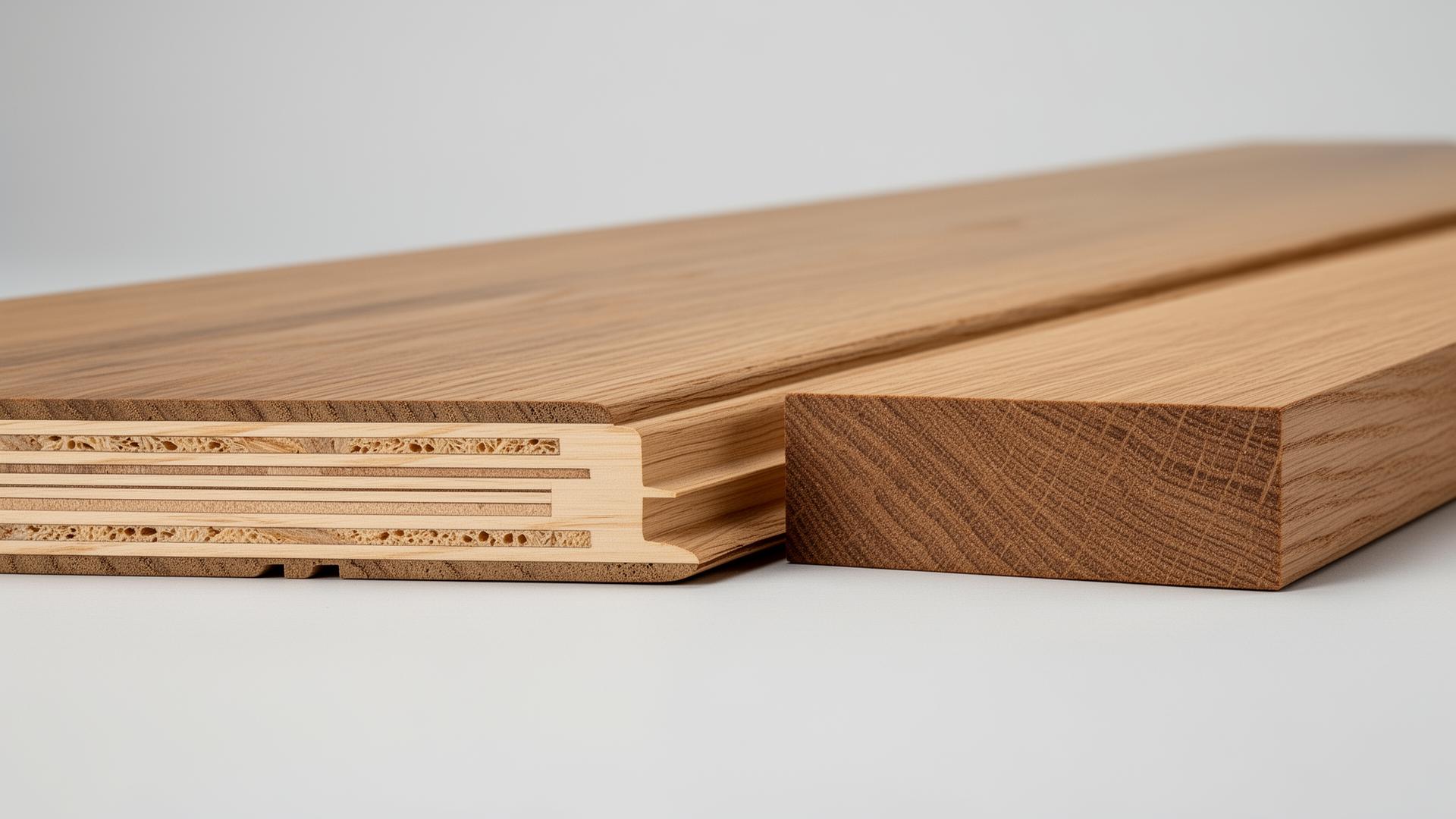
Engineered timber flooring is a premium floorboard made of multiple layers. The top layer — called the wear layer — is genuine hardwood: European Oak, Spotted Gum, Blackbutt, or Tasmanian Oak. Beneath it, cross-oriented plywood or high-density fibreboard layers create a dimensionally stable core that resists the expansion and contraction that affects solid timber.
The result is a floor that looks, feels, and sounds like solid timber underfoot, but performs better in the conditions most Melbourne homes face — concrete slabs, apartments, and homes with underfloor heating or cooling.
How engineered timber is constructed
A typical engineered board has three to five layers:
- Wear layer (2–6 mm) — The visible surface. Thicker layers can be sanded and refinished multiple times. A 4 mm layer typically allows 2–3 sandings; 6 mm allows 4–5.
- Core layers (cross-ply hardwood or HDF) — Usually 3–9 layers of wood or fibreboard bonded in alternating grain directions. This cross-lamination is what gives engineered timber its stability.
- Backing layer — A balancing veneer or HDF layer that prevents the board from warping.
Key benefits of engineered timber
Climate stable
Cross-ply core resists expansion and contraction through Melbourne's hot summers and cold winters.
Slab & apartment friendly
Performs reliably on concrete slabs and in multi-storey buildings where solid timber often fails.
Compatible with underfloor heating
Engineered construction handles the gentle heat cycle better than solid boards.
Wide plank options
Stable core allows longer, wider boards (up to 240 mm) without cupping or gapping.
Real hardwood surface
Genuine oak, spotted gum or blackbutt wear layer — not a printed imitation.
Better value
Uses less slow-growth hardwood than solid timber, delivering premium aesthetics at a lower price.
Why engineered timber suits Melbourne's climate
Melbourne's weather is notorious for its variability — 40 °C dry heat in January, followed by 10 °C southerly changes and winter rainfall. Solid timber absorbs and releases moisture with every seasonal swing, leading to cupping, gapping, and warping over time.
Engineered timber's cross-ply core limits this movement to roughly one-third that of solid timber. That means:
- Less gapping between boards in winter heating
- Reduced risk of cupping on concrete slabs
- Compatibility with hydronic and electric underfloor heating
- Better performance in apartments with limited climate control
Engineered timber vs solid timber
| Feature | Engineered Timber | Solid Timber |
|---|---|---|
| Real wood surface | ||
| Concrete slab suitability | Risk of moisture damage | |
| Underfloor heating | Not recommended | |
| Dimensional stability | Excellent | Moderate — expands & contracts |
| Sanding & refinishing | 2–5 times (wear-layer dependent) | 5–7+ times |
| Plank width | Up to 240 mm stable | Typically 80–130 mm |
| Cost (supply & install) | $110–$180 / m² | $140–$220 / m² |
| Best for | Modern homes, slabs, apartments | Heritage homes, suspended floors |
Popular species & finishes in Melbourne
The wear layer determines how your floor looks, feels, and ages. These are the species we see most requested across Melbourne's eastern and inner suburbs:
European Oak
The most popular choice for modern renovations. Pale, open grain that takes stains beautifully — from limed white to deep charcoal. Works in both Scandinavian-minimal and classic-Hampton interiors.
Spotted Gum
A native Australian hardwood with striking colour variation from pale browns to deep chocolates. Extremely durable (Janka 11), making it ideal for high-traffic family homes.
Blackbutt
Even, honey-toned grain with a clean, contemporary look. Lighter than Spotted Gum and less variable, so it's easier to match across large open-plan spaces.
Tasmanian Oak
A softer, more affordable option with a straight, fine grain. Best suited to bedrooms and low-traffic areas where budget is a primary concern.
Installation methods
Three methods are common in Melbourne. The right choice depends on your subfloor, budget, and whether acoustic insulation is required (especially in apartments).
Floating installation
Boards click together over an acoustic underlay. Fastest and most cost-effective. Ideal for apartments and renovations where you want to avoid adhesives. Can be walked on immediately.
Direct glue-down
Boards are bonded directly to the concrete slab with moisture-resistant adhesive. Best for heavy traffic areas and wide planks. Creates the most solid, quiet feel underfoot. Requires a moisture barrier on new slabs.
Secret nailing
Used over existing timber subfloors or plywood sheets. Boards are nailed through the tongue so no fasteners are visible. The traditional method and often the most durable over decades.
Maintenance & longevity
Engineered timber is low-maintenance, but a few habits will keep it looking new for 25–40 years:
- Sweep or vacuum weekly to remove grit that can scratch the surface
- Damp-mop with a pH-neutral timber cleaner — never saturate the floor
- Use felt pads under furniture legs and rugs in high-traffic zones
- Maintain indoor humidity between 40–60% where possible
- Re-coat with polyurethane or hardwax oil every 7–10 years before wear becomes visible
With a 4 mm+ wear layer, you can also have the floor professionally sanded and refinished when the surface eventually shows wear — typically after 15–20 years in a family home.
Engineered timber costs in Melbourne
Prices vary by species, wear-layer thickness, board width, and installation method. Here's what Melbourne homeowners typically pay for supply and professional installation:
| Product tier | Typical range | What you get |
|---|---|---|
| Entry level | $110–$135 / m² | 2 mm wear layer, Tasmanian Oak, floating install |
| Mid range | $135–$160 / m² | 3–4 mm wear layer, Spotted Gum or Blackbutt, glue or float |
| Premium | $160–$180 / m² | 4–6 mm wear layer, wide-plank European Oak, glue-down |
Prices include supply, installation, and standard trims. Subfloor preparation, staircase work, and furniture moving are quoted separately. All Cinix Flooring quotes are free and no-obligation.
Frequently asked questions
What is engineered timber flooring?
Engineered timber flooring is a multi-layer board with a real hardwood wear layer (typically 2–6 mm) bonded to a stable plywood or high-density fibreboard core. It looks and feels like solid timber but handles temperature and humidity changes far better.
Is engineered timber flooring suitable for Melbourne's climate?
Yes. Melbourne's variable climate — hot dry summers and cool damp winters — causes solid timber to expand and contract significantly. Engineered timber's cross-ply core resists this movement, making it ideal for Melbourne homes, especially those on concrete slabs or with underfloor heating.
Can engineered timber be sanded and refinished?
Yes, depending on the wear-layer thickness. A 4 mm wear layer can typically be sanded 2–3 times over its lifetime. A 6 mm wear layer can be sanded 4–5 times, giving it a lifespan comparable to solid timber.
How much does engineered timber flooring cost in Melbourne?
Supply and install costs range from $110–$180 per square metre depending on species, wear-layer thickness, and installation method. European Oak sits at the premium end, while Australian species like Spotted Gum offer excellent value.
Engineered timber vs solid timber — which is better?
Engineered timber is better for most modern Melbourne homes due to its stability on concrete slabs, compatibility with underfloor heating, and resistance to humidity changes. Solid timber is ideal for heritage homes with suspended timber subfloors where maximum sandability is desired.
How is engineered timber flooring installed?
Three methods: floating (click-lock over underlay), direct glue-down to concrete, or secret-nailing to timber subfloors. The best method depends on your subfloor type, budget, and whether you need acoustic insulation.
Ready to see engineered timber in your home?
Cinix Flooring brings sample boards to your door, measures your space, and delivers a tailored quote — usually within 24 hours. No obligation, no pressure.